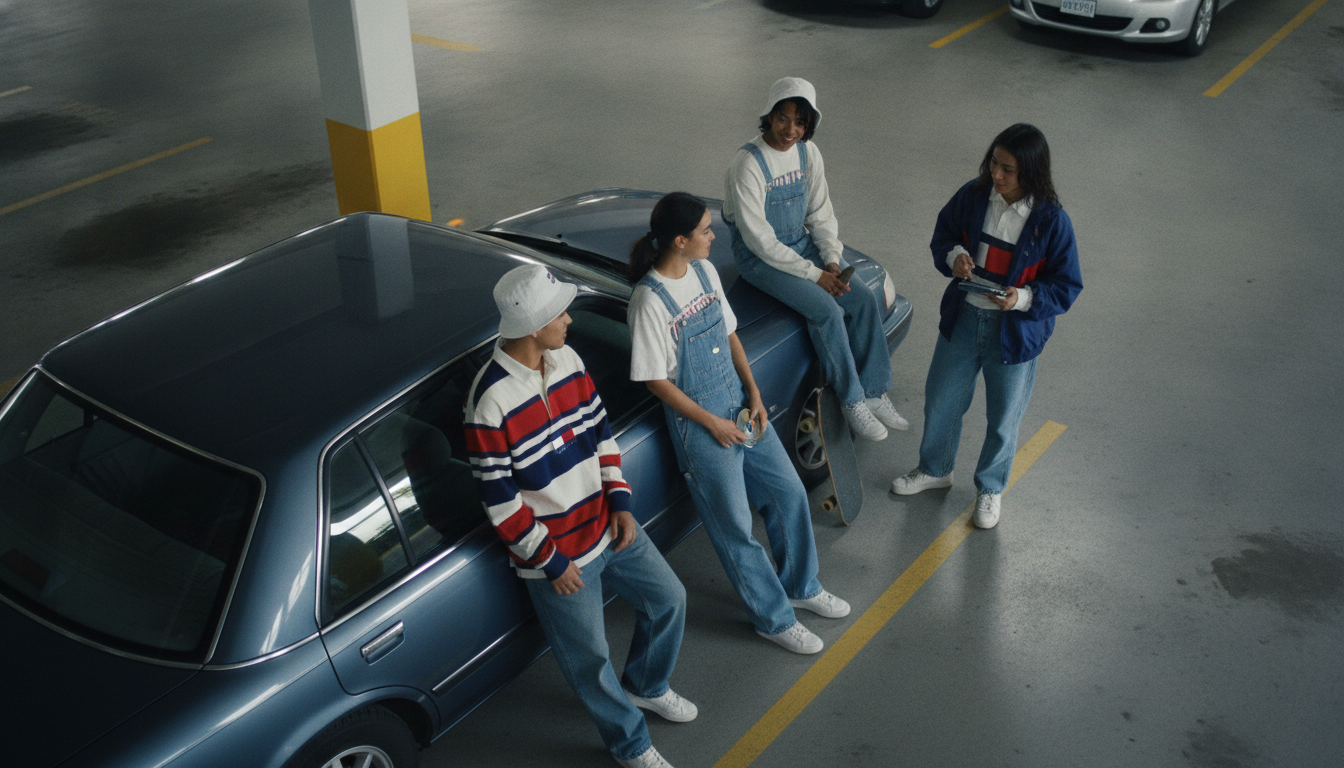
Yes—Tommy Hilfiger was a major 1990s fashion staple. The brand’s bold red-white-blue logo, oversized silhouettes, and preppy-meets-streetwear vibe fit perfectly with the decade’s love of statement labels and relaxed fits. You’d see Hilfiger on school campuses, in music videos, on magazine covers, and across pop culture as a sign of being current, sporty, and brand-aware.
Tommy Hilfiger hit a sweet spot: it looked polished enough to feel “classic,” but loud enough to feel “new.” The 90s were full of logo-forward style—think big graphics, color blocking, and recognizable branding—and Hilfiger delivered that in an approachable way. Baggy jeans, rugby shirts, varsity-style jackets, and oversized tees made it easy to build outfits that felt effortless while still looking intentional.
The brand also benefited from high visibility in entertainment and youth culture. As hip-hop and street style shaped mainstream fashion, Tommy Hilfiger pieces became part of the uniform—often worn oversized, layered, and paired with sneakers. That crossover appeal helped it reach far beyond traditional preppy fashion and become a true mass-market trend.
Some of the most recognizable 90s Tommy looks included logo T-shirts and sweatshirts, color-block windbreakers and puffer jackets, rugby and polo shirts, denim (especially relaxed-fit jeans and jackets), and accessories like caps. The fit was frequently roomy, with longer lengths and wider silhouettes that matched the era’s overall styling.
It is—largely because 90s-inspired fashion keeps cycling back. Vintage Tommy pieces, retro logo designs, and throwback color blocking remain popular for people who want an authentic nostalgic look. For a deeper dive into the brand’s 90s impact and style cues, visit the full guide here.
Ralph Lauren, Nautica, Calvin Klein, Gap, Nike, and Adidas were also big in the 90s, with styles ranging from preppy basics to sportswear and logo-heavy street fashion.







Leave a comment